I’m an engineer at CTK, working on power devices. A few months ago, marketing came to us saying they wanted to push a TOLL‑8L packaged product line. So we had several heated meetings – and I mean heated. The core question wasn’t “can we do it?” – it was “is TOLL a real need, or just a bandwagon?”
We eventually agreed: yes, it’s a real need. But the journey was messier than any glossy presentation would suggest. Here’s what we fought over, what we measured, and what we learned – in plain engineer speak.
Argument #1: Smaller footprint – but can it really handle the heat?
This was the first table‑slapper. TOLL-8L is undeniably small – about 9.9×11.68 mm, with a height of only 2.3 mm. That’s a lot smaller than D²PAK. But we all know power devices hate heat. Less volume means less surface area for heat to escape – physics doesn’t care about marketing slides.
So we ran our own thermal tests. We put the same MOSFET die into both TOLL-8L and D²PAK packages, and stressed them under 120 A continuous current at 85 °C ambient – mimicking an on‑board charger environment. The result? TOLL-8L ’s junction temperature was about 12 °C lower than D²PAK. The reason: the exposed thermal pad on TOLL-8L is large enough to make RθJC around 0.73 °C/W, compared to D²PAK’s 1.05.
That 12 °C difference is huge in practice – it can mean removing a heatsink or re‑routing the airflow for better overall system cooling.
But here’s the catch – and we tell every customer this: TOLL-8L is not a drop‑in replacement. If your PCB layout doesn’t provide enough copper area under the thermal pad, the heat won’t go anywhere, and TOLL-8L’s advantage disappears. So our FAE team always does a layout review together with the customer. Just handing over a part without guiding the thermal design? That’s irresponsible, and we don’t do it.
Argument #2: Kelvin source – legit improvement or just a spec‑sheet gimmick?
TOLL-8L has four pins – the extra one is the Kelvin source pin. In theory, it separates the gate drive loop from the power loop, reducing common‑source inductance, which cuts switching losses and ringing.
One of my colleagues joked that it might work in the lab, but on a noisy production board with messy traces, the benefit would be marginal. We decided to settle it with a head‑to‑head test. Same MOSFET die, one in TOLL-8L, another in D²PAK (without Kelvin). At 100 kHz and 150 A, we measured turn‑on loss (Eon) – TOLL came in nearly 55 % lower, and turn‑off loss (Eoff) was about 25 % lower. More importantly, the gate ringing amplitude was roughly halved.
After seeing those waveforms, the sceptic on our team went quiet.
That said, the Kelvin advantage really shines at high switching frequencies. If your application runs at 50 kHz or below, the extra cost of TOLL might not be worth it. Our internal rule is: high‑frequency, high‑current – go TOLL-8L; low‑frequency – do the math and don’t over‑spec.
Argument #3: Can we really ramp up yield and capacity?
This one was my personal headache. TOLL-8L is leadless, and its wire‑bonding, solder‑pad design, and singulation precision are more demanding than traditional packages. We use ASM bonders – great machines – but early on, our yield hovered around 92 %, which is nowhere near our internal target of 98 % for automotive‑grade products.
We spent about three months tweaking bond parameters, refining the mould tool, and adjusting solder‑paste thickness. Slowly, yield climbed to 98.5 % and has stayed there. We’re also expanding our advanced packaging facility in Foshan with over 1 billion RMB investment, so capacity won’t be a bottleneck. But those three months of trial‑and‑error? Nobody puts that in a brochure.
Why CTK is confident about TOLL-8L – the real edge
To be honest, the chip design itself isn’t the biggest hurdle for TOLL-8L – the real challenge is assembly and test. Without a solid back‑end line, even the best die can underperform.
We’ve been doing discrete packaging for years – diodes, transistors, MOSFETs, TVS, ESD – with ASM equipment and experience in multi‑chip (dual‑chip, quad‑chip) modules. TOLL-8L is essentially a natural extension of that: more bond wires, tighter layout, but the fundamentals are already there.
Then there’s our automotive DNA. We hold IATF 16949 and AEC‑Q101 certifications, and our internal specs are even tighter than the industry standards. We run full‑scale ageing tests and thermal cycling on every batch – no shortcuts, even when deadlines loom. Some might call it obsessive. But that’s exactly why our automotive customers trust us.
Real applications – no fluff, just facts
A few projects we’ve actually won:
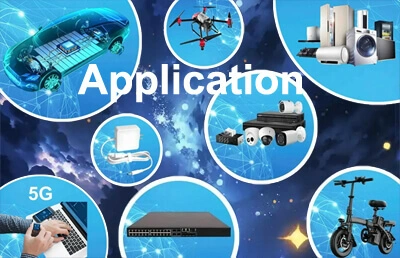
Server power supplies: A customer switched from D²PAK to TOLL-8L and saved about 30 % board space. The lower profile also improved airflow, and they measured a 0.8‑percentage‑point efficiency gain – which is huge in the server world.
Electric two‑wheeler controllers: They needed to scale from 100 A to 150 A, but the old package couldn't handle the extra heat. After moving to TOLL, the junction temperature dropped by about 15 °C, and they eliminated an extra aluminium‑substrate heatsink – cost saving and reliability gain.
Energy‑storage BMS: The customer required 1000 temperature‑cycling tests without failure. TOLL-8L passed easily – the larger source‑solder area reduces current density and electromigration risk. It’s not a spec‑sheet boast; it’s structural.
Final honest take
TOLL-8L is a great package, but it’s not a silver bullet. Whether it fits your design depends on switching frequency, current level, thermal environment, and budget. Our FAE team can run thermal simulations and double‑pulse tests to give you real data, not generic recommendations. We’ve also started working on TOLL versions for SiC and GaN – if you’re looking at high‑voltage, high‑frequency applications, we’d love to talk.
No marketing fluff. Just engineering.
About CTK
CTK (Tongke Electronics) is a national‑level “Little Giant” enterprise based in Dongguan, China, with its own brand CTK. We specialise in R&D and manufacturing of discrete semiconductors – diodes, transistors, MOSFETs, TVS, ESD, IGBT, SiC – with an annual output of 9 billion units, exported to over 60 countries. We hold IATF 16949 and AEC‑Q101 certifications, and our internal quality standards often exceed industry requirements. For more technical discussion, reach out to our FAE team – we speak the same language.