

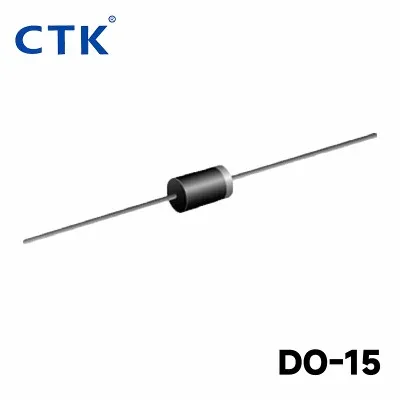
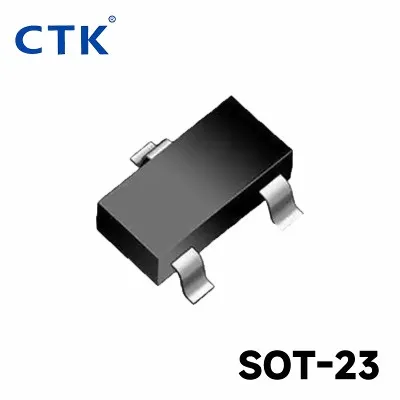
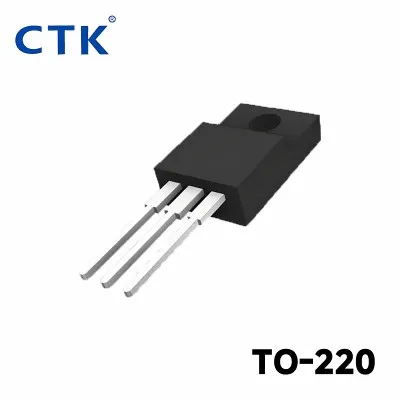
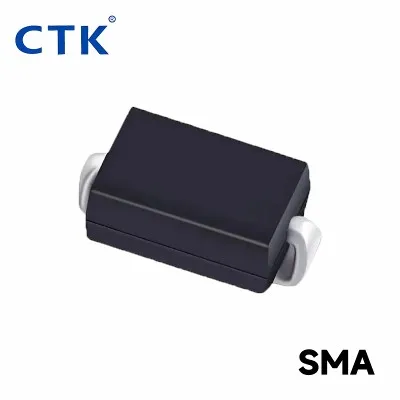
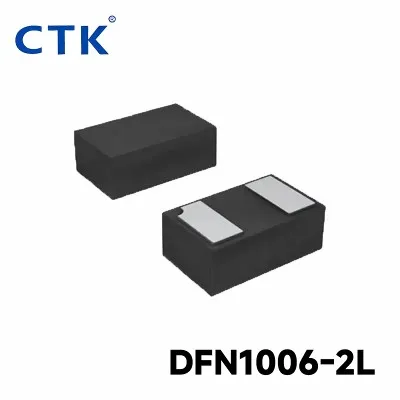
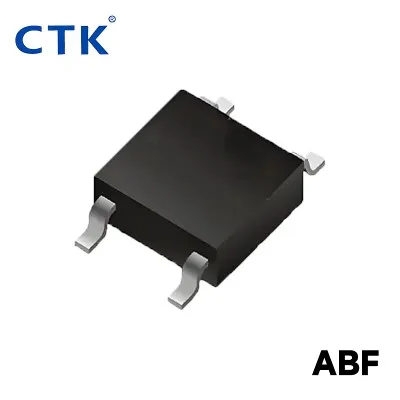
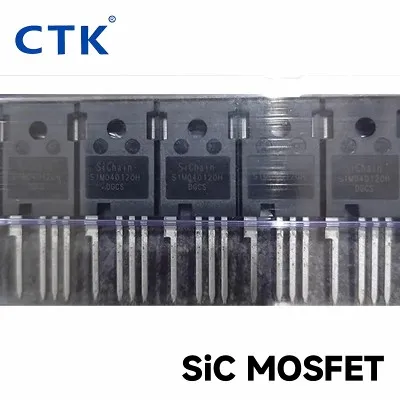

There are many types of diodes. Based on the semiconductor material used, they can be divided into germanium diodes (Ge diodes) and silicon diodes (Si diodes). According to their different applications, they can be divided into detector diodes, rectifier diodes, Zener diodes, switching diodes, isolation diodes, Schottky diodes, light-emitting diodes (LEDs), silicon power switching diodes, rotating diodes, etc. According to their die structure, they can be divided into point-contact diodes, surface-contact diodes, and planar diodes. A point-contact diode is made by pressing a very thin metal wire onto the surface of a smooth semiconductor wafer, and passing a pulse current through it, causing one end of the wire to be firmly sintered with the wafer, forming a "PN junction". Because it is a point contact, it only allows a small current (not exceeding tens of milliamps), and is suitable for high-frequency, low-current circuits, such as radio detectors. A surface-contact diode has a larger "PN junction" area, allowing a larger current (several amps to tens of amps), and is mainly used in "rectification" circuits that convert AC to DC. A planar diode is a specially designed silicon diode that can not only carry a large current but also has stable and reliable performance, and is often used in switching, pulse, and high-frequency circuits.
Light-emitting diodes (LEDs) are also composed of a PN junction and exhibit unidirectional conductivity. However, their forward operating voltage (turn-on voltage) is higher than that of ordinary diodes, approximately 1–2.5V, while their reverse breakdown voltage is lower, around 5V. They begin to emit light when the forward current reaches approximately 1mA, and the luminous intensity is approximately proportional to the operating current; however, as the operating current reaches a certain value, the luminous intensity gradually approaches saturation, exhibiting a non-linear relationship with the operating current. Typically, the forward operating current of small LEDs is 10–20mA, with a maximum forward operating current of 30–50mA.
LED Light-Emitting Principle: LEDs can be made in various shapes, such as rectangles, circles, letters, and symbols, and come in various colors, including red, green, yellow, orange, and infrared. They are characterized by small size, low power consumption, ease of driving, high luminous efficiency, uniform and stable light emission, fast response speed, and long lifespan, and are widely used in indicator lights and large-screen display devices.


